Military Base Independence Begins With The Utilities Outside The Fence
The Pentagon described a 30-day infrastructure goal. Equipment, supplies and testing would determine the resulting capability.
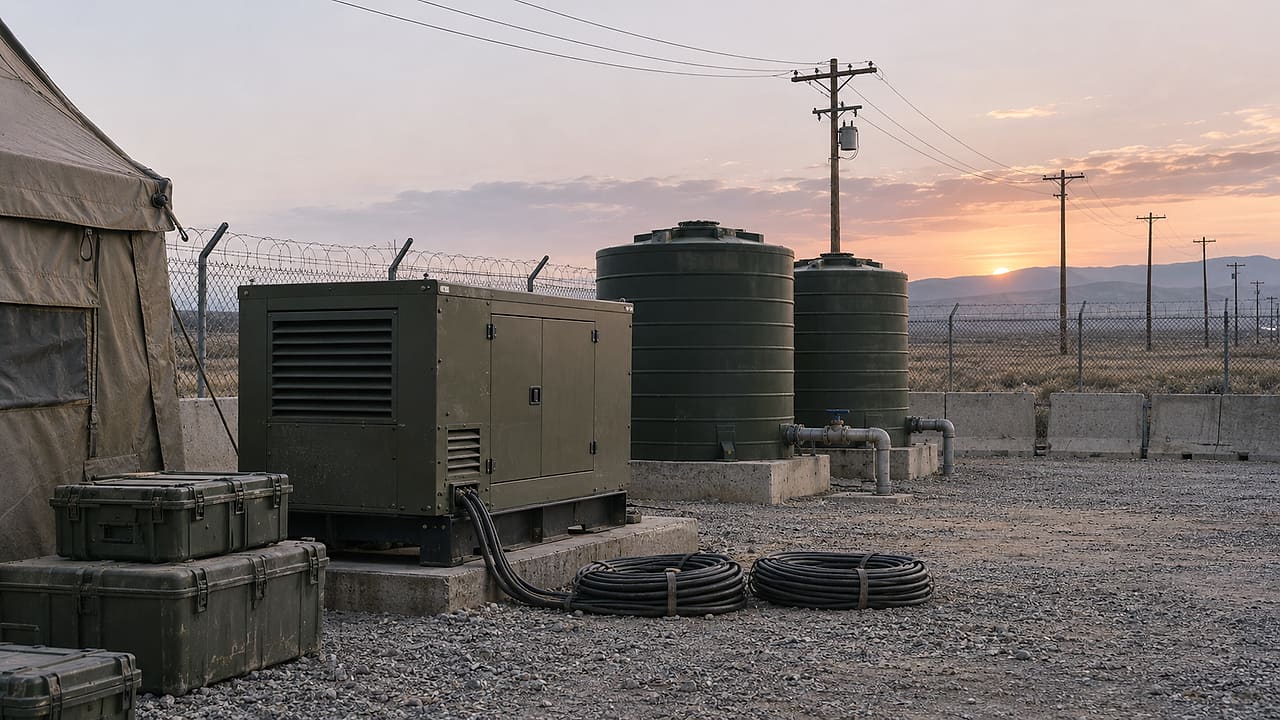
WASHINGTON—The Pentagon’s late-October description of Fortress America included a concrete test for military self-reliance: keeping installations operating when the utilities outside the fence stop supplying them. The phrase sounded strategic. The requirements involved generators, water and the infrastructure to use both.
A department report published October 29 described installations designed to rely on their own infrastructure for thirty days, detached from external utilities if the civilian grid failed. It also described a public-private economic model and a related prototype-base initiative.
The report described a planned capability. It left an implementation question for each installation: which services could its own equipment and supplies actually sustain for the stated period? The answer requires testing the systems under the conditions they are intended to withstand.
A design target becomes a capability only after systems are funded, installed, supplied and tested. A base can be inside a secure perimeter while depending on power, water and deliveries that originate elsewhere. The initiative’s practical value depends on addressing those connections.
The department had given the objective a name. Its performance would be measured in working services and elapsed days, including days when the announcement could no longer provide assistance.
Sources: Department of War report, reproduced by Infrastructure Now: base resilience goalsThe Defense Watch: scope of the Fortress America and prototype-base initiatives